
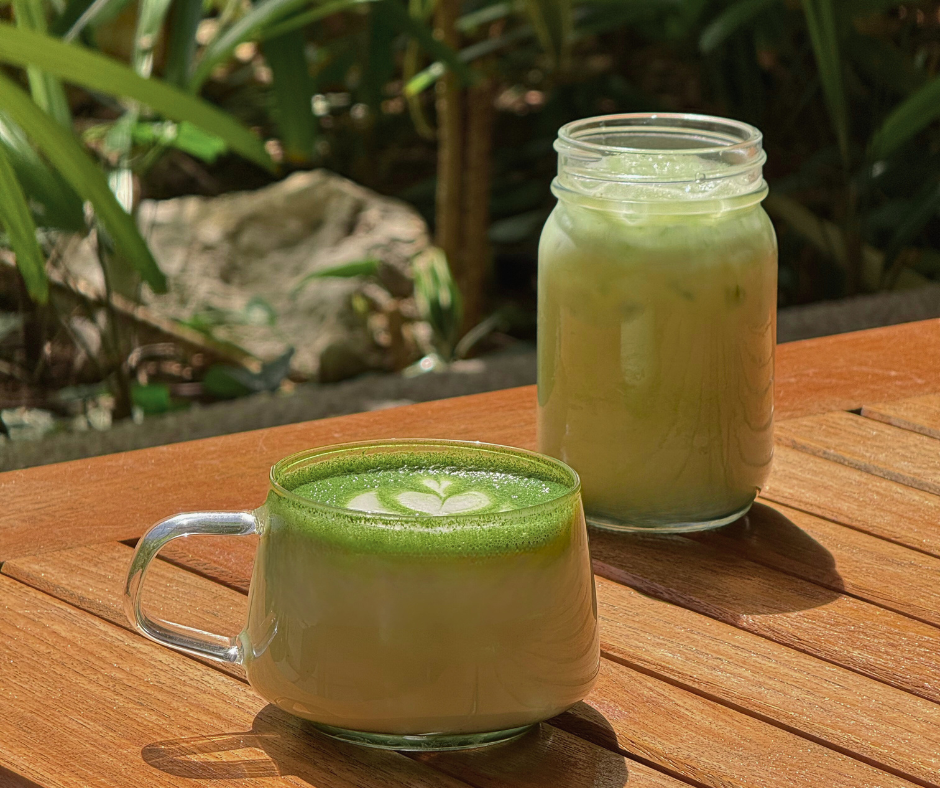
Opus brings the matcha to you; we’ll show you how to bring the famous matcha latte to your home.
If you’ve visited your local cafe (an Opus Coffee, perhaps?) in the last decade, you’ve undoubtedly heard about matcha – and more specifically, matcha lattes. Maybe you know and love them. Maybe you’ve never given them a chance – after all, a bright green drink can be a little off-putting to an unfamiliar coffee connoisseur. We hope you give one a try after reading.
Meet Your Matcha
Matcha (literally meaning “tea that is ground”) consists of powdered, whole green tea leaves. Grinding the whole leaf – with its chlorophyll-packed structure from being grown in the shade – results in a vivid green powder with brain-fueling amino acids, rich minerals, a solid dose of caffeine, and a delicious umami flavor. L-theanine (a naturally-present antioxidant) balances things out for a focused but level-headed energy boost. These benefits make it very popular with sippers who want a sustainable caffeine experience, whether that’s morning workouts, getting over the afternoon slump, or late-night studying.
Matcha: A Verdant History
Early preparations, beginning in the Song Dynasty, looked pretty different from today’s matcha – tea cakes were ground into a brown, coarse powder on demand and whisked with water. Later came large stone mills, made especially for finely grinding tea without compromising flavor. The 16th century saw the development of the ubiquitous Japanese tea ceremony, with designated tea houses, specialized matcha tools, and a preparation method called chan-oyu.
Until the abolition of the shogunate (the military ruling class of Japan), matcha remained a luxury item tied to elite tea plantations near the capital. After this, tea cultivation spread widely across Japan. While modern drying machines later improved consistency, the essential growing and grinding methods remain close to their earlier forms, down to the stone mills.
Matcha stayed largely within East Asia for centuries. It appeared in the U.S. during the late 20th century (mainly in specialty shops) and only gained recognition in the early 2000s in niche cafes. The drink’s true breakout came in 2006, when the sweetened matcha latte that’s now common across Western cafes hit the scene: a modern twist on a centuries-old tradition, continuously elevated by shops and baristas who are passionate about quality and innovation.
Matcha Latte, All Day
The most beloved preparation for matcha is a matcha latte. Luckily it’s very easy to replicate a cafe-quality matcha latte at home using a good quality matcha (Pro-Tip: We sell matcha powder in-house for your convenience!)
Here’s what Opus recommends:
Ingredients
- 3 to 5 grams of matcha (sifting optional; more matcha = bolder flavor)
- 2 ounces of water (hot but not boiling)
- 1 ounce of your favorite sweetener (optional and to taste)
- 8 to 10 ounces of your favorite milk
Preparation
- To a small round bowl, add your matcha and the water; whisk vigorously using either a cha-sen (bamboo matcha whisk) or a handheld electric whisk. The matcha should be fluffy, frothy, and not have clumps. If you’re using a cha-sen, zig-zag motions help more than circular stirring – imagine you’re beating eggs, rather than stirring a powder
- Prepare your milk
- If you want a hot matcha latte, steam your milk either by using a home steam wand or scalding on the stovetop before frothing with an electric whisk, leaving a couple inches of room
- For an iced matcha latte, fill a glass ¾ full with ice cubes and milk, leaving just a couple inches of room
- To your whisked matcha, add your sweetener (do not stir the sweetener in with a cha-sen: they’re just made to handle matcha!)
- Pour your matcha over your milk; stir well and enjoy!
Beyond the Latte
Aside from the matcha latte, matcha can be added to so many recipes. In its most modern usages, it can impart a complex flavor to just about anything or be used as a natural green food dye in entrees and sweets alike.
Thanks so Matcha!
Thank you for joining us on this matcha latte journey. If you haven’t had a matcha latte before, we hope you give one a try soon – and if you were already a matcha pro, we hope you learned something new. We’d love to see your work: if you make a delicious matcha latte or recipe at home with Opus Coffee’s matcha, email it our way or tag us on social media.