
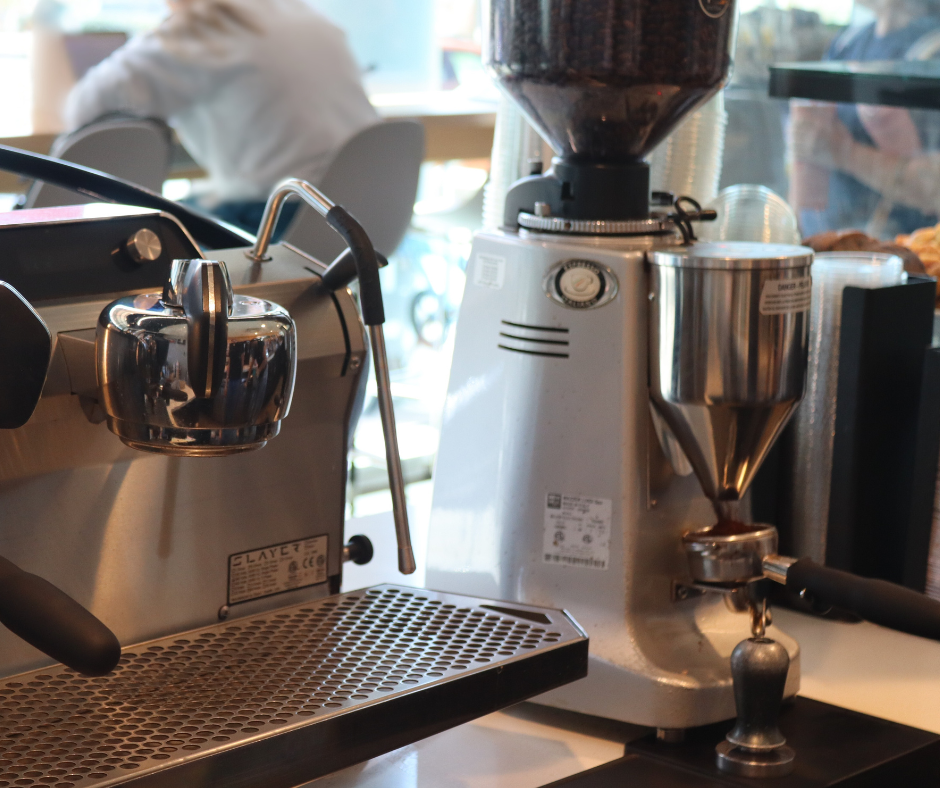
What is the importance of grind size?
Many factors come into play to make your perfect cup of coffee – brew ratios, water temperature, the beans you choose from your latest Opus Coffee run, and grind size.
Grind size describes how coarse (or fine) your coffee is after using a grinder to break down your beans for brewing.
Generally, it is organized into four categories: Coarse, Medium, Fine, and Superfine. Here’s a general guideline:
- Coarse – large grounds, like chunky sea salt
- Medium – gritty grounds, like beach sand
- Fine – small, smooth grounds, like white sugar
- Superfine – powdery grounds, like a handful of flour
Matching grind size to your brewing method
Choosing your grind courseness depends entirely on what you’re using to brew your coffee. You want to ensure that the coarseness matches the physical structure of the brewer (to ensure the beans are contained within the filters) and allows your coffee to brew at the right time and intensity.
Here are tips for the most common brewing methods:
The French Press
- Aim for a Coarse ground to ensure none of the coffee escapes the sieve, plus the longer brewing time will result in bold flavors signature of the French press.
Pour Over, Chemex, and Drip
- There are some subtle differences in grind size for these methods depending on the thickness of the paper filter or if the filter is metal. If your paper filter is thick or if you’re using a metal filter, aim for a Medium-to-Coarse grind size to avoid overbrewing and bitter notes. If your paper filter is thin, lean toward a Medium-to-Fine coarseness to ensure the coffee doesn’t brew too quickly and leave you wanting more flavor.
Espresso & Moka Pot
- The key to these two brewing methods lies in boiling water being forced through fine grounds with a lot of pressure. Making your coffee Superfine ensures that the water finds its way through the grounds evenly and at a good pace – a great bonus is that the pressure plus all of the rich oils and flavors exposed during Superfine grinding results in an extremely vivid brew.
Cold Brew
- Cold brew does best with Coarse grounds. This ensures no sediment makes its way through the filter or bag, and less exposed surface area will ensure that, through the long brew time via immersion, you won’t get flavors that are too bold or bitter. For more info, check out our How To Make the Best Cold Brew blog.
How to adjust your grind size at home
While the Opus Coffee team can grind your freshly-roasted bag of beans to your desired coarseness right in store or to ship directly to your house, many home brewers grind their coffee at home for the freshest taste possible. There are generally two types of grinders: burr grinders and blade grinders.
Blade grinders work by chopping beans like a tiny blender. As these types of grinders often work on “pulse” settings, take note of your grind coarseness as you actively grind, pausing to check as you go. If you’re just starting out, it may be helpful to stop periodically, turn the grinder off, then open it and feel the beans between your fingers. This will help you to learn to differentiate the difference in size.
Burr grinders work by grinding beans between two toothed plates, which results in a uniform consistency. The grind coarseness is determined by the space between the two burrs, and adjusting them varies from grinder-to-grinder – check your manual for the how-to, and experiment with different settings to familiarize yourself on what setting corresponds to what coarseness. Be aware that as burrs age and dull, you’ll have to set the burrs “finer” than when you first purchased it.
The Nitty-Gritty
At the end of the day, there is no one-size-fits-all approach for grind size. While we’ve covered a good springboard for you to start from, we encourage you to experiment, especially between different batches. Stray from your norm to find the grind size that tastes the best to you – beauty is in the tastebuds of the beholder.